
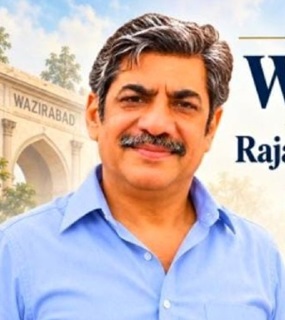
By: Raja Ishtiaq Ullah Khan
We need to view domestic politics through the lens of global affairs. In my opinion, to understand the current situation in Pakistan today, it is essential that we also try to comprehend the changes taking place in the world. Where we stand today, national politics and internal issues cannot be viewed merely as our domestic matters. What is happening in the world directly impacts our economy, our politics, and our daily lives. In such a scenario, being unaware of global developments can prove detrimental to us. Today, some global analysts even go as far as to say that the world is heading toward a Third World War—and according to some, it has already begun. This situation demands that we take global changes seriously and remain prepared to cope with their potential impacts.
The United States is the world’s largest economy and strongest military power, yet it is sinking under a heavy burden of debt. The US government debt has been rising continuously for decades and has now crossed the mark of nearly forty trillion dollars. Europe’s economic, political, and social conditions are also facing severe challenges. The balance of global power is shifting. Western powers, which have exerted a profound influence on global politics, trade, and the economy for the past several centuries, are today facing emerging powers and changing economic realities.
History teaches us that shifts in the global balance of power often lead to wars and major conflicts. The trade wars, sanctions, military disputes, and violations of international laws that we witness in the world today are all part of this shifting global scenario.
The impact of these circumstances will not remain confined to major powers alone. When wars or global tensions disrupt oil supplies, compromise trade routes, or increase freight and insurance costs, oil-importing countries like ours suffer severely. Rising oil prices increase transportation costs, impact electricity generation expenses, and drive up the prices of essential commodities—the heaviest burden of which is borne by the common man whose income is already limited.
At present, there is severe tension in our region. Pakistan faces several serious challenges regarding its security, economy, and internal stability. In such circumstances, we must never forget that it takes decades for nations to build and progress, but wars can destroy them in just a few years. True wisdom of nations lies not merely in acquiring power, but in safeguarding their peace, stability, and future.
The example of Libya is right before us. There was a time when Libya was counted among the prosperous countries of Africa. Its citizens enjoyed numerous benefits regarding education, healthcare, and other basic facilities. People from Pakistan used to go to Libya for employment. However, war and instability plunged the country into severe destruction. The situation deteriorated to such an extent that inhumane crimes like human trafficking and slave trade emerged, and reports of slave markets became a subject of global debate. All of this happened in the twenty-first century. This example serves as a stark reminder of how horrific the consequences can be when state systems collapse and peace is lost.
Look at Syria. Years of war altered the lives of millions of families. People were forced to leave their homes, cities, and country. Among them were countless individuals who had never imagined that they would become strangers in their own homeland or be forced to seek refuge in other countries.
The lesson for us from these examples is that a state’s peace, the stability of its institutions, and the protection of its citizens are not trivial matters. We must be prepared to make every sacrifice for the protection of the state. Setting aside our differences, we need to understand that Pakistan is our shared home. To safeguard the peace of this home, protect the lives and property of our people, and secure the future of coming generations, we must make every possible effort.
This by no means implies that there should be no room for dissent within the country. In a democratic society, disagreement is a natural and necessary process. However, on matters of national security, state stability, and the fundamental interests of the public, we must demonstrate responsibility, restraint, and foresight. Political differences have their place, but the peace and future of Pakistan must remain paramount for all of us. Today, we need to ask ourselves: Are we learning lessons from global conditions? Are we making serious efforts to resolve our economic problems, promote national unity, and strengthen state institutions? Or are we allowing our differences to escalate to the point where national interests are pushed into the background?
The challenges facing Pakistan cannot be countered merely with slogans. They require a strong economy, effective strategies, political tolerance, national solidarity, and public trust. We must utilize our resources, energy, and capabilities for national construction and development rather than mutual confrontation.
We need to forget our internal differences and unite, because the lesson of history is clear: internal discord and instability can weaken any nation, whereas unity, wisdom, and foresight give nations the opportunity to recover even in the toughest of times. Pakistan belongs to all of us, and its future is our collective responsibility. Global events are sending us one message: value peace, prioritize national interests, and do not let internal differences become an obstacle to national unity. We must decide today that we want to leave behind a peaceful, stable, and prosperous Pakistan for future generations—because the protection, stability, and progress of Pakistan is not just the responsibility of the government or a single institution, but a shared responsibility of us
Global Tensions and Pakistan: Our National Responsibilities

Leave a Reply