
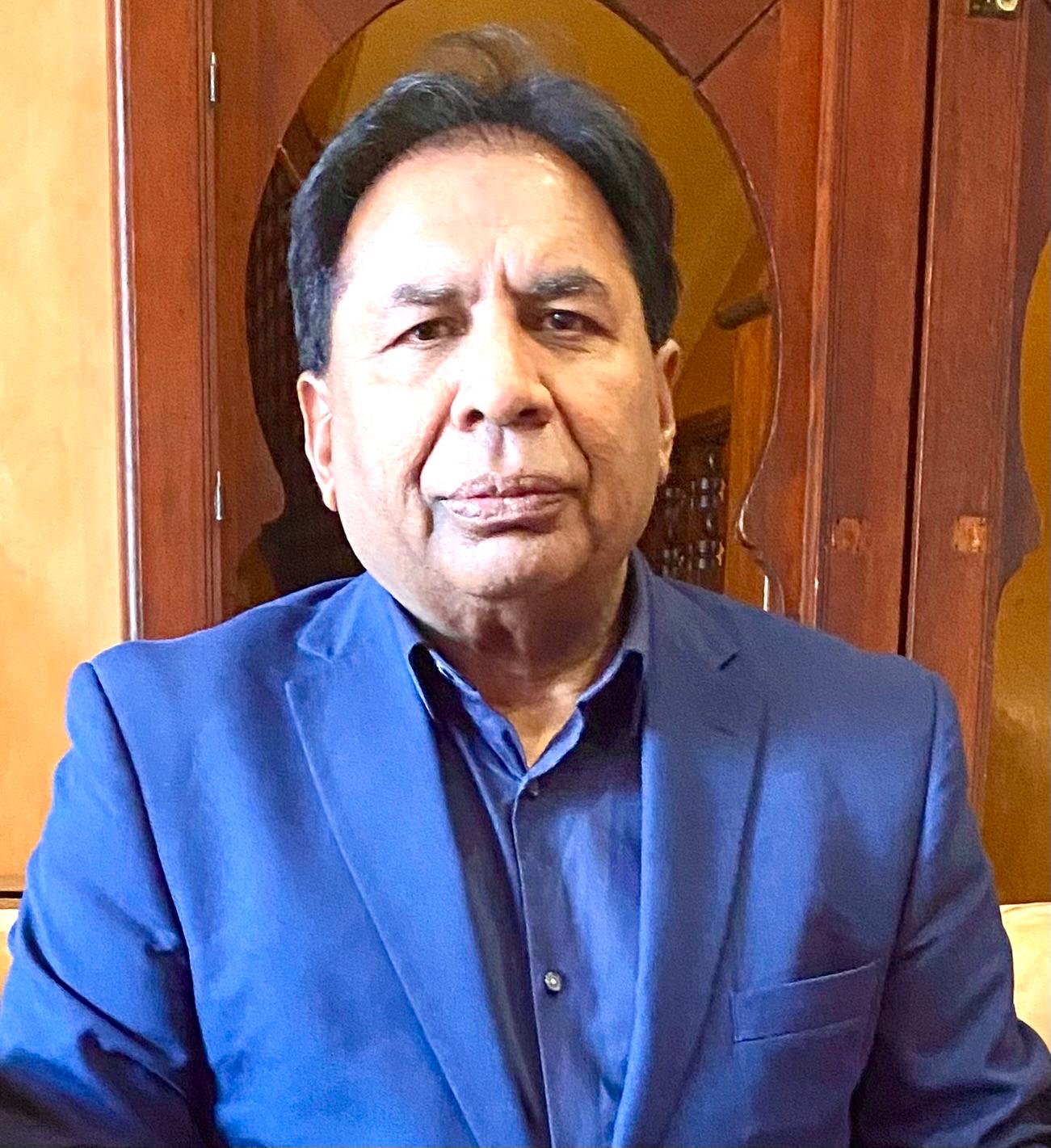
Malik Jawaid Iqbal Overseas Advisor to Prime Minister of Azad Jammu Kashmir.
The United Nations (UN) was established in the aftermath of Second World War with a clear and urgent mission, to save future generations from the future wars. Built on principles of peace, diplomacy, human rights, and collective responsibility, the UN embodies the belief that lasting peace can only be achieved through cooperation and respect for international law. At the heart of this vision lies the principle of self-determination, a fundamental right enshrined in the UN Charter.
In recent years however, the authority and relevance of the United Nations have been increasingly challenged. During the current presidency of Donald Trump, the United States often adopted a unilateral approach to global affairs, weakening multilateral institutions and disregarding consensus. This shift had serious implications for peace efforts, particularly in regions already marked conflict.
One of the most significant casualties of this approach has been the two-state solution to the Israeli-Palestine conflict. For decades, the United Nations and the broader international community have supported the creation of two state. Isreal-Palestine living side by side in peace and security. This framework is rooted in United Nations General Assembly Resolution 181 of 1947 and reaffirmed by multiple Security Council Resolutions 242 (adopted in 1967) 338 (adopted in 1973) and 2334 (adopted in 2016).
Under President Trumps administration, this vision became increasingly distant. Decisions such as recognising Jerusalem as Israel’s capital, cutting financial support to Palestinian institutions, and dismissing UN resolutions undermined the role of the United States as mediator and weakened the foundations of the two-state solution. When diplomacy and international law are sidelined, frustration and despair grow, creating conditions in which extremism thrives and the likelihood of the future conflict increase. Without a just political solution, peace risks begin replaced by cycles of violence that make war increasing inevitable.
A similar erosion and pattern of UN principles can be seen in Jammu and Kashmir a region internationally recognised as disputed. United Nations Security Council Resolution 47 (adopted in 1948) along subsequent resolutions, affirmed that the future of Jammu and Kashmir should be decided by the will of people through a free and impartial plebiscite. This commitment reflects the UN’s core principle of self-determination.
India’s policies in its occupied territory of Jammu and Kashmir, particularly the revocation of the regions special status, have raised serious concerns among peace advocates and human rights organisations. Critics argue that India is increasingly adopting military control, territorial integration, and demographic changes while limiting political freedoms and suppressing dissent. Prolonged restrictions on civil liberties and the absence of meaningful dialogue have deepened alienation distanced the prospect of a peaceful resolution mirroring the Palestine plight.
Weather in Palestine or Kashmir, the denial of self-determination undermines the possibility of sustainable peace. History repeatedly shows that peace cannot be imposed through force or unilateral decisions. When legitimate political aspiration is ignored, conflicts are not resolved as they are merely postponed, often returning with greater intensity and loss of life.
The weakening of the United Nations by powerful nations exacerbates these challenges. When international law is applied selectively, it sends a dangerous message that power matters more than justice and that the rights of vulnerable populations can be overlooked in favour stronger and more affluent nations. Such precedents threaten not only regional stability but the entire international order after 1945.
The United Nations is not without flaws and must continue to evolve and reform. Yet undermining it, or abandoning its core principles, is not the answer. True peace depends on strengthening international institutions, respecting human rights, and upholding the rights of all peoples to determine their own future as its practiced in democratic countries.
In increasingly divided world, peace requires co-operation over domination and dialogue over force. Supporting the United Nations, defending self-determination and recommitting to just political solutions is the only to save the United Nations foundations and protect the vulnerable in the world we all live in.
Discover more from UGNEWS
Subscribe to get the latest posts sent to your email.




Leave a Reply