
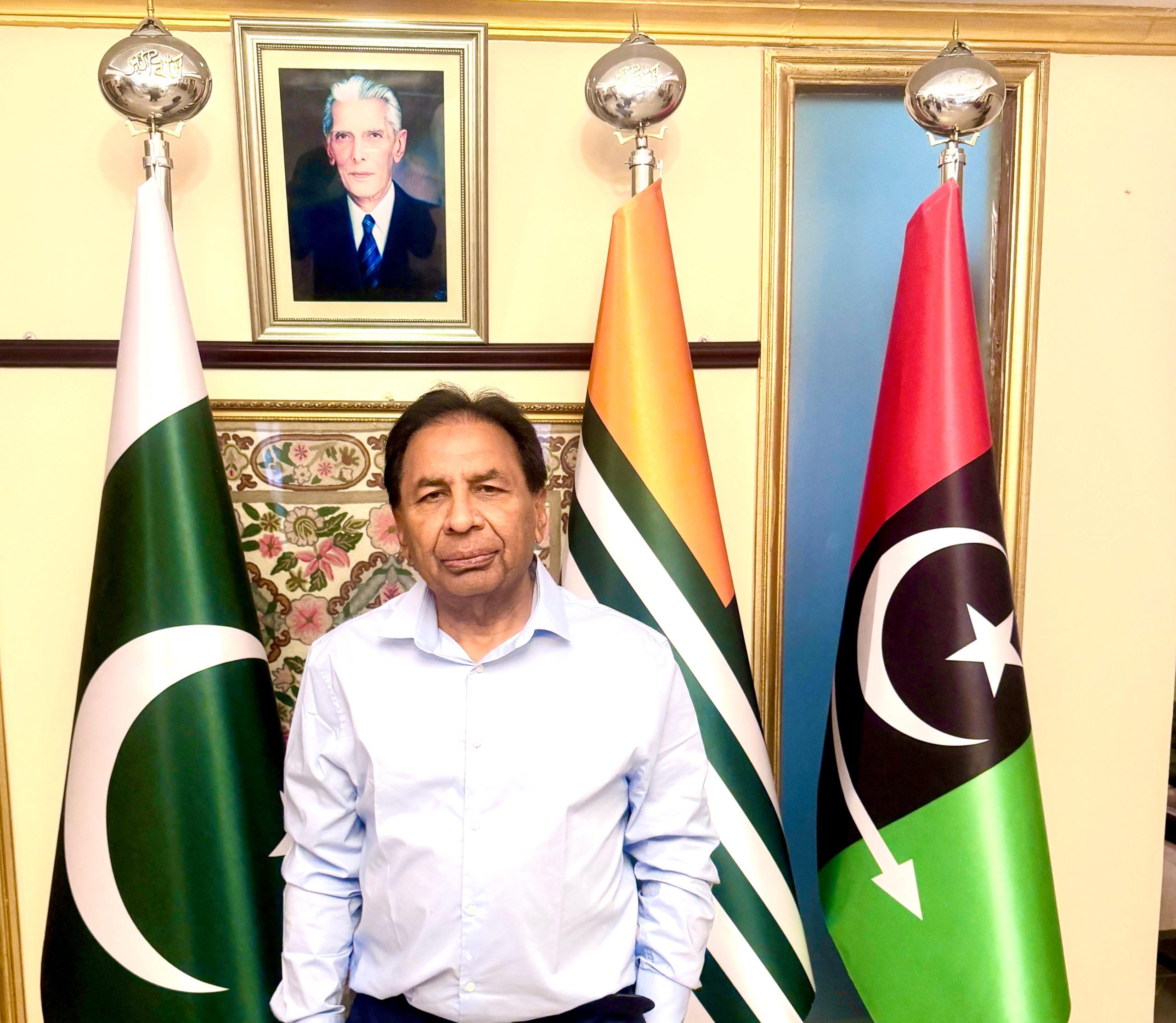

London. / Muzafrabad Arif Chodhry
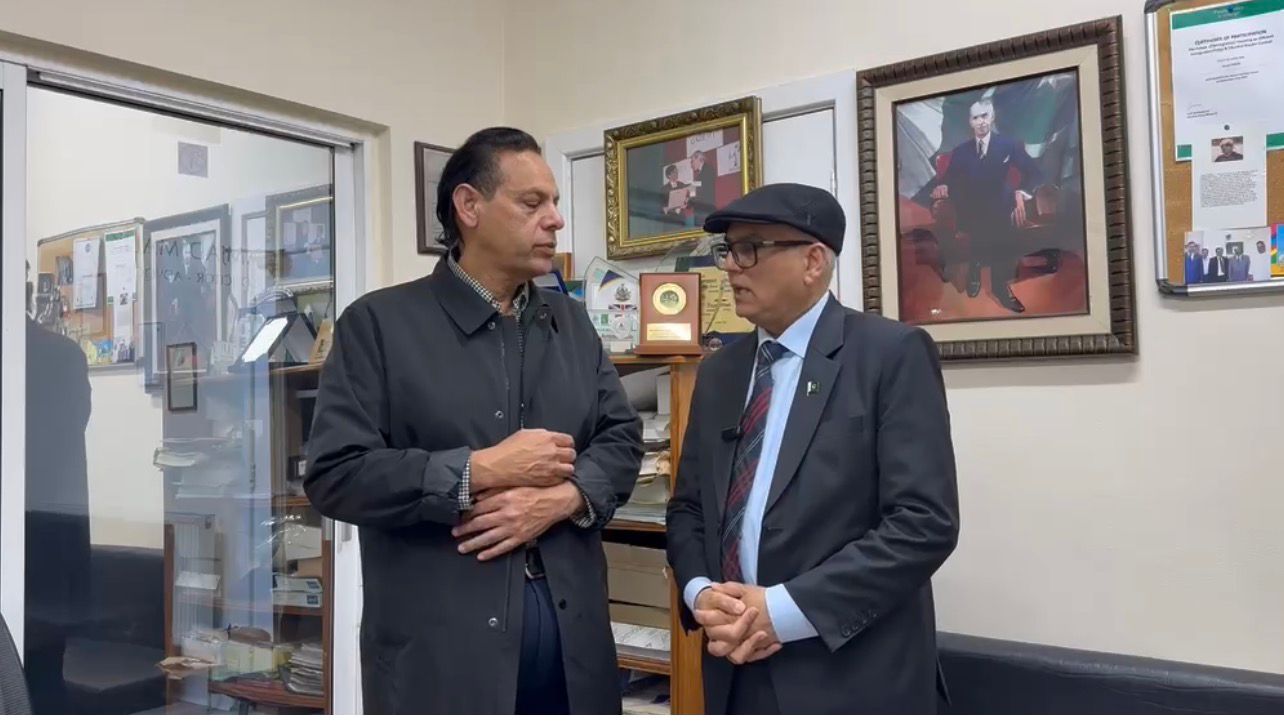
Islamabad: Overseas Advisor Malik Jawaid Iqbal met with Prime Minister Faisal Mumtaz Rathore to discuss the evolving situation in Azad Jammu and Kashmir and the growing concerns being expressed by overseas Kashmiris regarding the safety and wellbeing of their families and loved ones amid the ongoing demonstrations and political unrest.
Members of the Kashmiri diaspora across the United Kingdom, Europe, the Middle East and North America continue to closely monitor developments in their homeland with increasing anxiety. Many overseas Kashmiris have family members directly affected by the current situation and remain deeply concerned about the escalating tensions and the possibility of further violence.
During the meeting, Malik Jawaid Iqbal conveyed the concerns of overseas communities and emphasised the urgent need for all stakeholders to exercise restraint and work towards a peaceful resolution. He stated that the current confrontation is not benefiting any party and risks creating further instability, division and uncertainty at a time when unity and cooperation are most needed.
“The situation on the ground is deeply worrying,” he said. “Continued confrontation will only lead to greater suffering for ordinary people. We must ensure that the interests of the people of Azad Jammu and Kashmir remain the foremost priority.”
He stressed that the current deadlock serves no constructive purpose and ultimately benefits only those who seek to weaken institutions and undermine stability. In his view, dialogue remains the only realistic and sustainable path forward.
Malik Jawaid Iqbal urged the Kashmir Action Committee to return to the negotiating table and engage in meaningful discussions with the government to help resolve the ongoing crisis. He noted that while peaceful protest is a democratic right, prolonged confrontation carries significant risks and can lead to unintended consequences that affect the wider population.
“The loss of life we have witnessed is a tragedy,” he said. “Our people are suffering on all sides, including demonstrators and members of the security forces. Every life lost is a loss for our nation. These deaths should compel all parties to seek a peaceful resolution rather than further escalation.”
The Overseas Advisor also acknowledged the challenges facing the government and expressed his belief that Prime Minister Faisal Mumtaz Rathore has consistently sought to address the situation through peaceful and democratic means. He described the Prime Minister as a sincere and honourable leader who understands the gravity of the crisis and the need for a balanced approach.
He added that criticism of government policies is a natural and essential part of democratic discourse. However, he argued that those criticising the Prime Minister should also present practical alternatives capable of breaking the current impasse.
“It is easy to criticise from the sidelines,” he remarked. “The real challenge lies in building consensus, bringing stakeholders together and finding workable solutions that serve the public interest. Leadership requires difficult decisions and constructive engagement.”
According to Malik Jawaid Iqbal, sustainable solutions are rarely achieved through confrontation alone. History demonstrates that lasting progress is typically the result of dialogue, compromise and mutual understanding. For that reason, he believes the Kashmir Action Committee should call off the current demonstrations and return to negotiations before more lives are placed at risk.
At the same time, he emphasised that the federal government must also exercise restraint and approach the issue through a political rather than purely security-focused lens. He cautioned against the use of unnecessary force against citizens and called for confidence-building measures that could help create an environment more conducive to meaningful dialogue.
Among those measures, he suggested the immediate withdrawal of Rangers and Frontier Constabulary personnel deployed in Azad Jammu and Kashmir, arguing that such a step would help reduce tensions and reassure the public that the government remains committed to a peaceful resolution.
“The objective should be de-escalation,” he said. “Both sides must take steps that encourage trust rather than deepen divisions.”
Malik Jawaid Iqbal also emphasised an important principle of democratic governance: while citizens have the right to express their grievances and demand accountability, the authority to maintain law and order rests with the state. He argued that no group should attempt to pressure or coerce governments through confrontation and that disputes should ultimately be resolved through constitutional, legal and democratic mechanisms.
He urged the leadership of the demonstrators to pursue their concerns through dialogue and the courts rather than continued confrontation. “Nothing positive will emerge from a cycle of escalation,” he stated. “The interests of the people must come first.”
The Overseas Advisor further called upon the Prime Minister of Pakistan Shabaz Sharif and Field Marshal General Asim Munir to initiate an independent inquiry into the circumstances that led to the current crisis. He argued that policymakers must examine why, after nearly eight decades, public frustration has reached a level where protests of this magnitude have taken place in Azad Jammu and Kashmir.
According to him, serious questions need to be addressed regarding governance, policy decisions and administrative failures during the period between October 2023 and November 2025. A transparent and credible investigation, he said, would help identify shortcomings and ensure lessons are learned for the future.
“We must understand what went wrong, who bears responsibility and what reforms are needed to prevent similar crises from emerging again,” he said. “Ignoring these questions will only increase public frustration and mistrust.”
Drawing comparisons with international affairs, Malik Jawaid Iqbal noted that political leaders around the world continue to seek diplomatic solutions to some of the most difficult and complex disputes. Despite profound disagreements, nations regularly choose negotiation over conflict because they recognise that dialogue offers the best opportunity for lasting peace.
“If countries facing major international disputes can continue talking and negotiating, there is no reason why we cannot resolve our own internal challenges through the same approach,” he said.
Concluding his remarks, the Overseas Advisor delivered a clear message to both the Kashmir Action Committee and the federal government: return to negotiations without delay. He reiterated that dialogue remains the only viable path towards a durable and peaceful settlement.
“The people of Azad Jammu and Kashmir deserve peace, stability and responsible leadership,” he said. “This is a moment that requires wisdom, patience and statesmanship from all sides. Those who are unwilling to be part of the solution risk becoming part of the problem.”
As concerns continue to grow both within Azad Jammu and Kashmir and among overseas communities, many hope that cooler heads will prevail and that all parties will embrace dialogue before further damage is done. The wellbeing of the people, the preservation of peace and the future stability of the region depend upon the willingness of leaders and stakeholders alike to choose negotiation over confrontation.
Discover more from UGNEWS
Subscribe to get the latest posts sent to your email.

Leave a Reply