
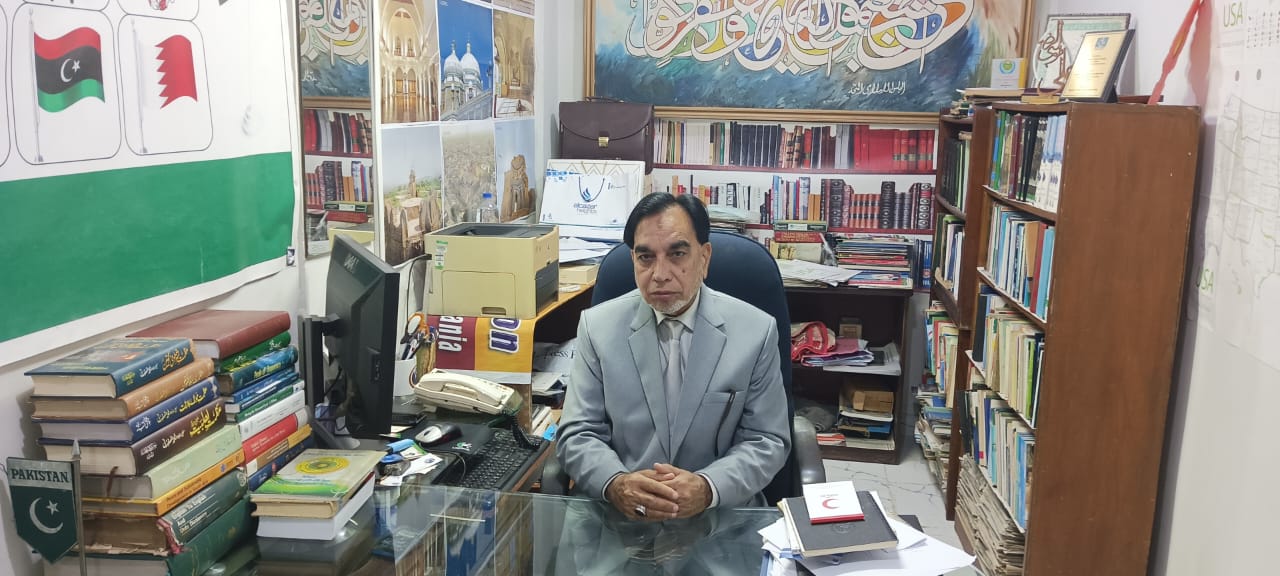
*Rasheed Ahmad Chughtai*ra
Email thepageintl.pk@gmail.com
Democracy in Pakistan has been a contentious and often turbulent journey since the country’s inception in 1947. The parliamentary system, modeled after the British Westminster system, has faced numerous challenges, including military coups, political instability, corruption, and governance issues. This report delves into the current state of democracy in Pakistan, the suitability of the parliamentary system, the possibility of reintroducing a presidential system, and the role of the powerful civil-military establishment.
*Historical Context of Democracy in Pakistan*
Since gaining independence, Pakistan has oscillated between democratic and military rule. The country has experienced three significant periods of military dictatorship: Ayub Khan (1958-1969), Zia-ul-Haq (1977-1988), and Pervez Musharraf (1999-2008). Each of these regimes promised stability and progress but ultimately stifled democratic processes and institutions.
*Challenges to Democracy*
1. **Political Instability and Corruption**
– **Frequent Government Changes:**
Pakistan has seen frequent changes in government, often marred by allegations of corruption and incompetence. These changes undermine the public’s faith in democratic institutions.
– **Corruption:** Corruption remains a pervasive issue, with Transparency International consistently ranking Pakistan poorly in its Corruption Perceptions Index. Corruption scandals involving top political leaders erode public trust and hinder effective governance.
2. **Governance Issues**
– **Weak Institutions:** Democratic institutions in Pakistan, including the judiciary and election commission, often lack independence and are susceptible to political influence.
*Lack of Policy Continuity:** Frequent government changes result in inconsistent policies, hampering long-term development and reform initiatives.
3. **Civil-Military Relations Military Interference:**
The military in Pakistan has historically played a significant role in politics, often undermining civilian authority. The civil-military imbalance is a critical factor in the instability of democratic governance.
*Powerful Establishment:**
The military and intelligence agencies hold substantial influence over key national policies, particularly in defense, foreign affairs, and internal security.
*The Suitability of the Parliamentary System*
The parliamentary system in Pakistan, though designed to ensure democratic representation, has struggled to function effectively. The frequent dissolution of assemblies, coalition politics, and lack of strong party discipline contribute to governance challenges. Critics argue that the system fosters short-termism and political opportunism rather than long-term national interest.
*Reintroduction of the Presidential System*
Given the shortcomings of the parliamentary system, some political analysts and parties have advocated for a return to a presidential system. Proponents argue that a presidential system could offer:
**Stable Executive Leadership:**
A president with a fixed term could provide stable leadership and policy continuity, reducing the frequent government changes seen in the parliamentary system.
*Direct Accountability:*
A presidential system could enhance accountability, as the president would be directly elected by the people and answerable to them, rather than to a fragmented parliament.
However, the reintroduction of a presidential system also poses risks:
*Concentration of Power:*
A presidential system could lead to the concentration of power in one individual, potentially undermining democratic checks and balances.
– **Historical Precedents:**
Previous presidential regimes in Pakistan have often led to authoritarian rule and suppression of democratic freedoms.
*The Role of the Civil-Military Establishment*
The civil-military establishment in Pakistan remains a powerful entity, often seen as a parallel power center. The establishment’s reluctance to cede control to civilian authorities poses a significant barrier to democratic consolidation. Key areas of tension include:
**Defense and Security Policy:**
The military’s dominance in defense and security policy limits civilian oversight and input.
*Political Engineering:*
Allegations of military involvement in manipulating political outcomes, including elections and party formations, are widespread.
*International Perspectives*
The international community has shown varying degrees of interest in Pakistan’s democratic trajectory:
*United States* : The U.S. has historically supported both civilian and military regimes in Pakistan, primarily driven by strategic interests in the region, including counterterrorism and stability in Afghanistan.
**China:**
China’s relationship with Pakistan, epitomized by the China-Pakistan Economic Corridor (CPEC), focuses on economic and strategic cooperation, often overlooking domestic political issues.
– **European Union:** The EU emphasizes democratic values and governance reforms in its engagement with Pakistan, offering support through development assistance and diplomatic channels.
*Democracy in Pakistan faces significant challenges* , including political instability, corruption, weak institutions, and a powerful civil-military establishment. While the parliamentary system has its flaws, transitioning to a presidential system carries its risks and uncertainties. Ultimately, the consolidation of democracy in Pakistan requires robust institutional reforms, reducing military interference in politics, and fostering a political culture that prioritizes national interest over personal gains. The international community’s role, while influential, should support Pakistan’s democratic aspirations and encourage sustainable governance practices.
*Rasheed Ahmad Chughtai**
Email thepageintl.pk@gmail.com
Discover more from UGNEWS
Subscribe to get the latest posts sent to your email.




Leave a Reply